
Budapest & Local Tips · 6 min read
Budapest Thermal Baths: A First-Time Visitor's Guide
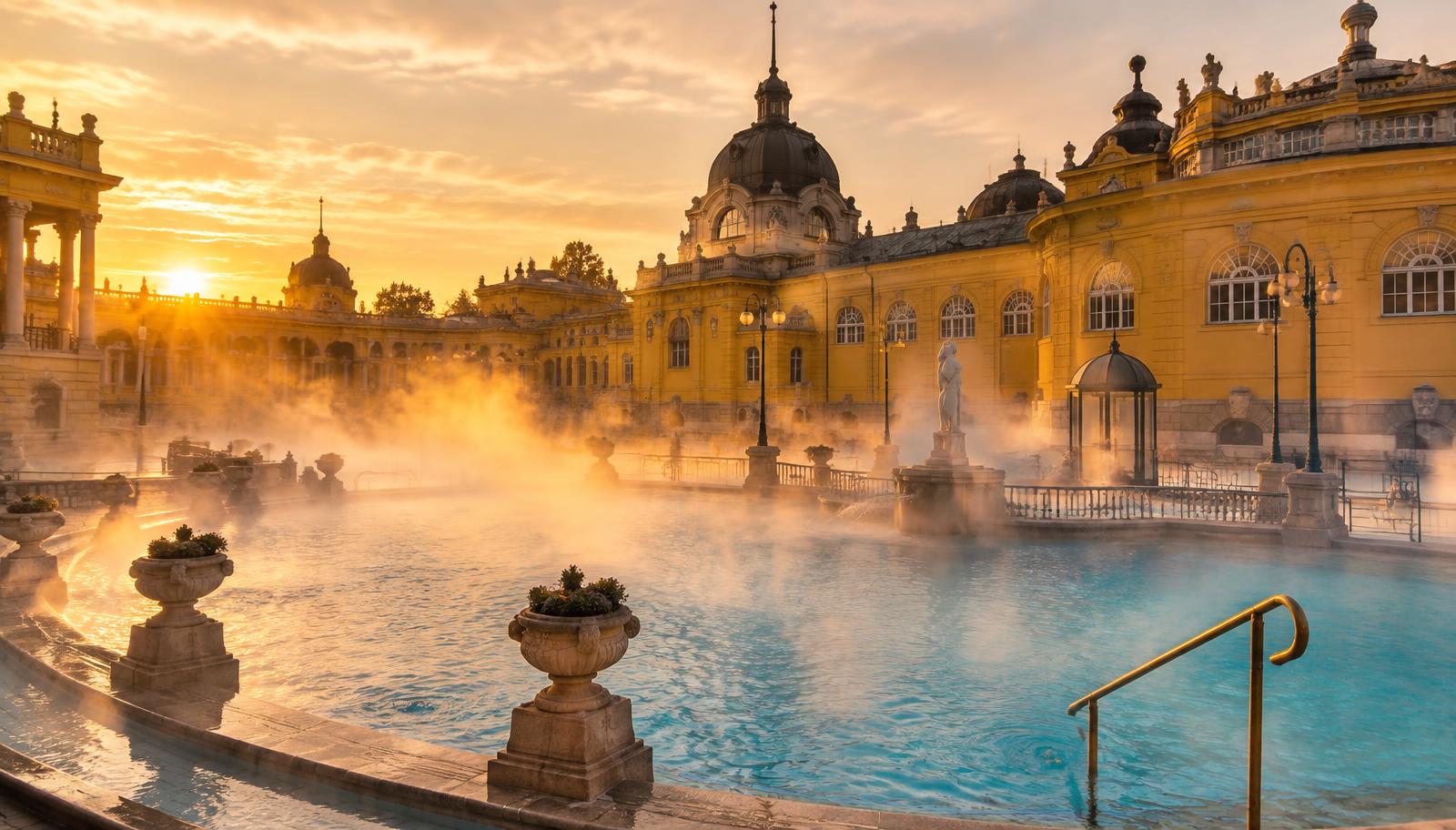
If you are visiting Budapest for the first time, there is one local experience that is difficult to miss: a thermal bath. The city sits on natural thermal springs, and bathing has been part of daily life here for centuries, from grand historic complexes with large outdoor pools to smaller baths where the atmosphere feels distinctly local.
This article is part of my complete Budapest guide: 10 Things to Know Before Visiting Budapest for the First Time
Why are Budapest's thermal baths so popular?
Budapest sits on an area with numerous natural thermal springs. Over the centuries different cultures built bathing facilities around these waters, including the Romans and later the Ottoman Turks.
That history is still visible today. Some baths occupy buildings more than a century old, while others preserve architecture and traditions from much earlier periods. Going to a thermal bath is therefore not simply a spa visit, it is a way to experience the city's culture.
Opening hours, available pools, ticket prices and temporary closures change regularly. Always check the bath's official website shortly before your visit.
1. Széchenyi Thermal Bath
Széchenyi is the image most people associate with Budapest. Located in City Park, the large neo-baroque complex is known for its outdoor thermal pools, distinctive yellow architecture and extensive indoor bathing areas.
Published opening hours are generally 7:00–20:00 Monday to Thursday, 7:00–22:00 on Friday and 8:00–20:00 at the weekend, although individual services can differ. There are numerous indoor and outdoor pools at different temperatures, plus saunas and steam rooms.
What makes it different is the scale, and it is also the easiest bath for a visitor to understand. Allow at least two to three hours. Address: Állatkerti körút 9–11.
2. Rudas Thermal Bath
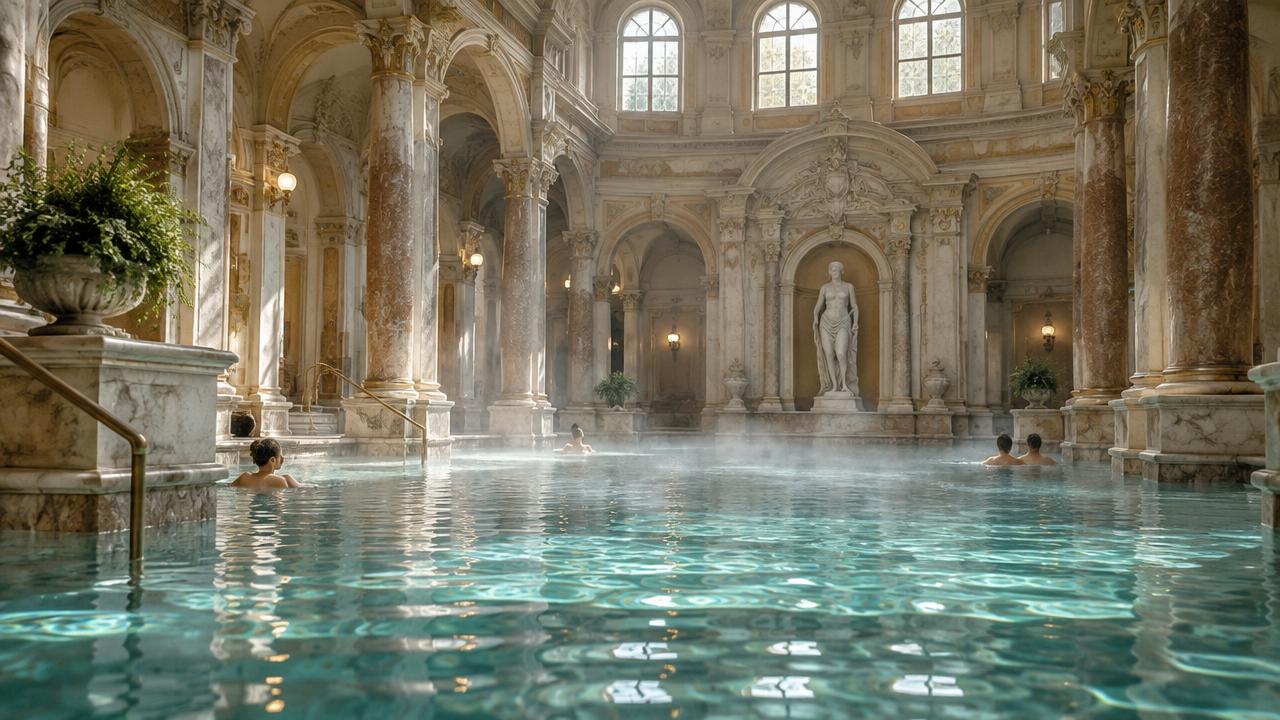
Rudas offers a very different atmosphere: a historic Turkish bath section combined with modern wellness facilities and a rooftop panorama pool overlooking the Danube.
One important practical detail, access to the Turkish bath varies by day. Some weekday periods are reserved for men or women, with co-ed bathing at specific times, while the wellness area follows a different schedule. Check before choosing your day, especially if you want to use the Turkish bath together as a couple or group.
Rudas also offers night bathing on Friday and Saturday from 22:00 to 03:00, with tickets sold online only. Minimum age is currently 14. Address: Döbrentei tér 9, on the Buda side.
3. Lukács Thermal Bath
Lukács is another historic bath, on the Buda side near Margaret Bridge, with a noticeably more local atmosphere than Széchenyi.
Published hours are generally 7:00–19:00, with extended opening until 22:00 on Tuesdays. There are thermal pools, wellness facilities, saunas and medical services. Some facilities can be temporarily unavailable due to maintenance, so check before travelling. Address: Frankel Leó út 25–29.
4. What about Gellért Thermal Bath?
Gellért is one of Budapest's most photographed historic baths, but if you are planning a trip now, there is an important update: it is closed for renovation.
According to the official website, the bath closed on 1 October 2025 with a planned reopening in 2028. Do not build your itinerary around it, and treat this as a reminder that older travel blogs often show information that is no longer current.
How much does a thermal bath ticket cost?
Approximate 2026 weekday base prices for adults, as a planning guide only: Lukács is the most affordable historic bath, Rudas costs more for access to every zone, and Széchenyi is the most expensive of the three.
Weekend tickets, cabins and peak periods cost more. Buy tickets directly at the bath or on the official spasbudapest.com website rather than through unofficial resellers.
| Bath | Approx. weekday ticket |
|---|---|
| Lukács | around 7,000 HUF |
| Rudas (all zones) | around 12,000 HUF |
| Széchenyi (locker) | around 13,200 HUF |
Prices are indicative and change regularly. The Budapest Card has included a Lukács entry among its benefits, check the current card terms before you buy.
Read the full guideIs the Budapest Card Worth It?Which bath should you choose?
| If you are looking for… | Consider… |
|---|---|
| The famous Budapest bath experience | Széchenyi |
| Large outdoor thermal pools | Széchenyi |
| Historic Turkish bath atmosphere | Rudas |
| Rooftop views over Budapest | Rudas |
| A historic Buda-side bath | Lukács |
| Gellért's famous architecture | Wait until it reopens |
This is not a ranking. Each bath offers a different experience, and your choice may depend on your location, schedule and preferred atmosphere.
What should you bring?
Packing a few simple things makes the visit much easier. Depending on the bath and ticket type you will use either a locker or a changing cabin.
- Swimsuit, the safest choice, particularly where bathing is co-ed
- Towel, Széchenyi and Lukács no longer rent towels (you can buy one on site), so bring your own
- Flip-flops, required in the pool areas, and useful between changing rooms and showers
- Water, warm pools are more tiring than you expect
- A small toiletry bag if you plan to shower before leaving
Do you need a swimming cap?
It depends on the pool. At Széchenyi a swimming cap is only required in the outdoor swimming pool used for lengths, not in the thermal sitting pools. Other baths have their own rules, and dedicated swimming pools often differ from thermal or leisure pools.
If you plan to swim lengths rather than simply sit in the thermal pools, check the current rules. When in doubt, asking at the entrance is easier than discovering the rule after you have changed.
How long should you stay, and when should you go?
Two to three hours is reasonable for a first visit: enough time to change, shower, try several pools, relax and explore the building without rushing. You do not need a whole day.
Early morning is quiet and leaves the day free for sightseeing. Afternoon fits naturally between other plans. Evening is especially atmospheric in winter, when the outdoor pools steam after sunset, and Rudas runs dedicated night sessions on Friday and Saturday.
Getting there
All of the major baths are reachable by public transport. Széchenyi is served by the Millennium Underground and trolleybuses, Rudas by several bus and tram routes near the Danube, and Lukács by trams and buses close to Margaret Bridge.
A private transfer makes more sense when you travel with luggage or as a group, or simply want door-to-door transport without navigating the city before or after bathing. You certainly do not need a car just to visit a bath.
Families and travellers with limited mobility should plan ahead: Széchenyi and Rudas admit guests aged 14 and over only, Rudas's historic Turkish section and rooftop pool involve steps and are largely not accessible, and accessible facilities at Lukács can be affected by maintenance.
Read the full guideBudapest Public Transport Guide: Tickets, Metro, Trams & BudapestGORelated serviceBudapest City Transfer, hotel to bath, door to door · 25 €Before you go
- Check the bath's official opening hours
- Check current ticket information and whether online purchase is required
- Bring a swimsuit, towel and flip-flops
- Check age restrictions (Széchenyi and Rudas currently 14+)
- Allow two to three hours
- Check for temporary pool closures
- Plan your transport before leaving your hotel
After the bath: Budapest by night
A relaxed afternoon in the thermal water pairs naturally with a calm evening. Instead of navigating the city tired and warm, you can see the illuminated Parliament, bridges and Castle District from a private car, with me pointing out the landmarks along the way.
If you are still planning your days, my 3-day itinerary shows where a bath visit fits best.
Read the full guide3 Days in Budapest: A Relaxed ItineraryRelated service2-Hour Private Budapest Evening Tour · 100 €Frequently Asked Questions
- Which is the best thermal bath in Budapest for first-time visitors?
- Széchenyi is usually the easiest first choice thanks to its scale, large outdoor pools and wide variety of facilities in one complex. Rudas is the better option if you want a historic Turkish bath atmosphere and rooftop Danube views.
- Is the Gellért Bath open in 2026?
- No. The Gellért Thermal Bath closed on 1 October 2025 for renovation, with a planned reopening in 2028.
- What should I bring to a Budapest thermal bath?
- A swimsuit, a towel, flip-flops, drinking water and a small toiletry bag. Széchenyi and Lukács no longer rent towels, so bring your own or buy one on site.
- Do I need to book thermal bath tickets in advance?
- Usually not, but some sessions, such as the Rudas night bathing on Friday and Saturday, are sold online only. Always check the official website of the bath.
- Is there an age limit at Budapest thermal baths?
- Some baths have one. Széchenyi and Rudas currently set a minimum age of 14, so check the rules if you are travelling with children.
- How long should I spend at a thermal bath?
- Two to three hours is comfortable for most first-time visitors, allowing time to change, shower, try several pools and relax.
Last updated: 2026-09-27